

Thanks to the collaboration between the Recover Foundation and the Official College of Pharmacists of Madridthe General Council of Official Associations of Pharmacists and the Illustrious College of Physicians of MadridIn the last month, we have been able to carry out different training projects among health workers in several health centres in Cameroon.
From paediatric procedures to pharmaceutical management, the aim is to modernise and improve the quality of working protocols in Cameroon's health centres, as well as to improve access to the health system for the most disadvantaged groups, especially women and children.

Children's health is a priority
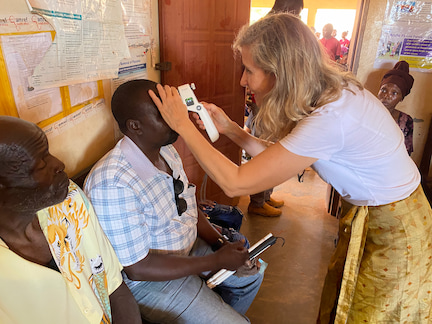
María Fernández, a paediatric surgeon at the CU Virgen de la Arrixaca Hospital in Murcia, worked closely with local medical professionals in Cameroon. By consulting and studying patients' clinical cases with them, she quickly found ways to improve the quality of medical care for children.
Maria managed to introduce manoeuvres and techniques that are common in Spanish paediatrics, emphasising the importance of thorough initial examinations. "In Cameroon, many diagnostic tests are ordered before the patient has been touched or observed," she explains, having just returned from her trip.
In addition, in order to correctly manage the data collected and to facilitate the work of the healthcare staff, María opted for the systematisation of the information: "I am the paediatrician who has to deal with the graphs and the constants taken frequently".
Supported at all times by the Recover Foundation, she has managed to save lives by combating cases of malnutrition in babies and cerebral malaria, experiences she describes as "gratifying" and "moving".

The importance of medicines
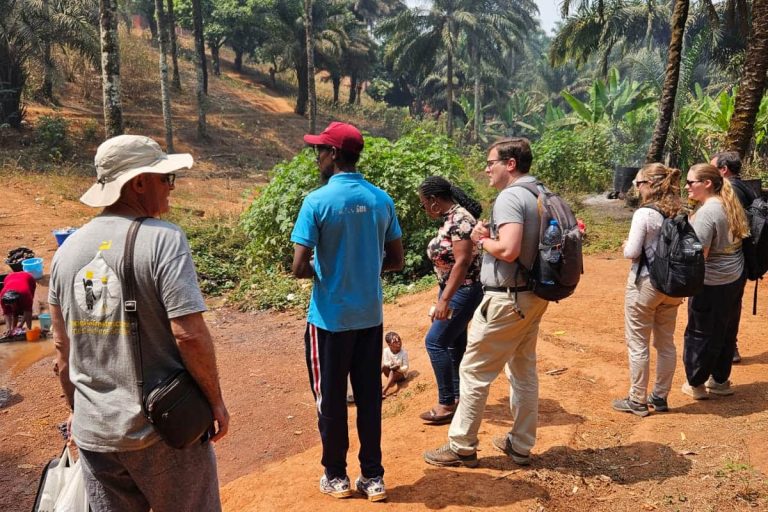
Resource management is crucial when resources are scarce, especially when it comes to medicines. Pharmacist Sofía Olmeda, together with her colleagues Alba Plou and María Gené, were in charge of offering a training course on pharmacy management in different hospitals in Cameroon. After a first online training module that was a great success with the public, it was time to put all this information into practice. The three of them started a supervision trip to the pharmacies of the centres participating in the programme, where they were able to see first-hand the impact of the knowledge imparted, and also to improve the practices of local professionals in the field.
"I think they have grasped the concepts necessary for proper pharmacy management: stock calculations, calculations of average monthly consumption, safety stock calculations... All of this will help them to avoid medicines going out of stock," says Sofía. Her idea is that this training course can continue to be developed in the future, expanding to more hospitals and more regions of the country.

You never stop learning
Both Maria and Sofia highlight the professional and personal lessons they took away from their experience in Cameroon. "I have learned to wait, to adapt to other rhythms", confesses María. For her part, Sofia believes that "the best way to help is to give them the tools to become independent". In a country where healthcare is still an expensive service that compromises the economic stability of patients, Maria and Sofia stress the importance of making healthcare cheaper and universal in order to improve the quality of life in Cameroon.