EN | EN | FR


From theory to practice: how we train health professionals in the field

Increased knowledge is the basis for building a better health system
Alba Plou and María Gené take a selfie with their pupils

Thanks to the collaboration between the Recover Foundation and the Official College of Pharmacists of Madridthe General Council of Official Associations of Pharmacists and the Illustrious College of Physicians of MadridIn the last month, we have been able to carry out different training projects among health workers in several health centres in Cameroon.

From paediatric procedures to pharmaceutical management, the aim is to modernise and improve the quality of working protocols in Cameroon's health centres, as well as to improve access to the health system for the most disadvantaged groups, especially women and children.

Maria Fernandez, paediatric surgeon, working in Cameroon

Children's health is a priority
María Fernández, a paediatric surgeon at the CU Virgen de la Arrixaca Hospital in Murcia, worked closely with local medical professionals in Cameroon. By consulting and studying patients' clinical cases with them, she quickly found ways to improve the quality of medical care for children.

Maria managed to introduce manoeuvres and techniques that are common in Spanish paediatrics, emphasising the importance of thorough initial examinations. "In Cameroon, many diagnostic tests are ordered before the patient has been touched or observed," she explains, having just returned from her trip.

In addition, in order to correctly manage the data collected and to facilitate the work of the healthcare staff, María opted for the systematisation of the information: "I am the paediatrician who has to deal with the graphs and the constants taken frequently".

Supported at all times by the Recover Foundation, she has managed to save lives by combating cases of malnutrition in babies and cerebral malaria, experiences she describes as "gratifying" and "moving".

María Gené organising the pharmacy

The importance of medicines
Resource management is crucial when resources are scarce, especially when it comes to medicines. Pharmacist Sofía Olmeda, together with her colleagues Alba Plou and María Gené, were in charge of offering a training course on pharmacy management in different hospitals in Cameroon. After a first online training module that was a great success with the public, it was time to put all this information into practice. The three of them started a supervision trip to the pharmacies of the centres participating in the programme, where they were able to see first-hand the impact of the knowledge imparted, and also to improve the practices of local professionals in the field.

"I think they have grasped the concepts necessary for proper pharmacy management: stock calculations, calculations of average monthly consumption, safety stock calculations... All of this will help them to avoid medicines going out of stock," says Sofía. Her idea is that this training course can continue to be developed in the future, expanding to more hospitals and more regions of the country.

From theory to practice: how we train health professionals in the field
From left to right, Alba Plou, María Gené and Sofía Olmeda.

You never stop learning
Both Maria and Sofia highlight the professional and personal lessons they took away from their experience in Cameroon. "I have learned to wait, to adapt to other rhythms", confesses María. For her part, Sofia believes that "the best way to help is to give them the tools to become independent". In a country where healthcare is still an expensive service that compromises the economic stability of patients, Maria and Sofia stress the importance of making healthcare cheaper and universal in order to improve the quality of life in Cameroon.

If you also want to collaborate, become a member of Recover now

en_GBEN

Sahrawi refugee camps

Population > 200,000

0.5 Doctors/1000 Inhabitants

Resource 8

From 2025

2 health centres supported

Telemedicine, infrastructures

Incidence in 13,000 people

Sahrawi camps - kindergarten

Spain

6.21 Doctors/10,000 Inhabitants

Resource 8

Since 2007

Resource 7

1,024 health and management volunteers, and non-health volunteers, offering their expertise

8 partner hospitals in the country

Resource 9

More than 90 companies/entities have collaborated with their projects

Tanzania

0,1 Doctors/10,000 Inhabitants

Resource 8

Since 2018

1 health centre supported

Operating theatre and other equipment, volunteering, telemedicine

Incidence in 10,140 people

Uganda

1,6 Doctors/10,000 Inhabitants

Resource 8

Since 2023

1 health centre supported

Telemedicine

Uganda context photo

South Sudan

0,4 Doctors/10,000 Inhabitants

Resource 8

Since 2023

2 health centres supported

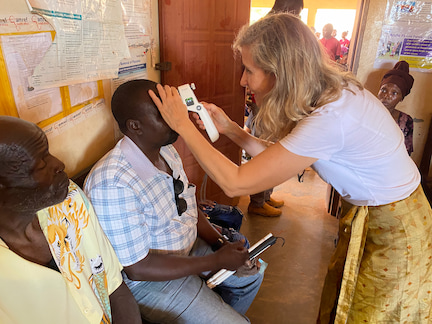
Ophthalmology campaigns

Incidence in 15,000 people

Mobile Clinic H Yambio South Sudan

Republic of Chad

0,6 Doctors/10,000 Inhabitants

Resource 8

Since 2018

1 health centre supported

Grants for laboratory training and equipment, nutrition unit and patient intervention in Spain

Incidence in 10,000 people

Image source: CC BY 2.0, Link

Equatorial Guinea

3,5 Doctors/10,000 Inhabitants

Resource 8

Since 2023

3 health centres supported

Telemedicine

Incidence in 1,000 people

Guinea Ecautorial context photo

Cameroon

1,24 Doctors/10,000 Inhabitants

Resource 8

Since 2007

71 health centres supported

Resource 10

Hospital management, electricity, water and sanitation infrastructure, health campaigns (child malnutrition, cervical cancer, cardiovascular risk, malaria, sickle cell disease), equipment (operating theatre, laboratory and physiotherapy equipment, X-ray machines, ultrasound machines, electrocardiograms, incubators, dental chairs, ambulances, etc.), training scholarships in Spain and Africa, telemedicine, intervention of 63 patients in Spain.

Incidence in 998,218 people

cameroon

Burundi

0,65 Doctors/10,000 Inhabitants

Resource 8

Since 2024

1 health centres supported

Reference anatomical pathology laboratory

Incidence in 78,031 people

Democratic Republic of Congo

3,7 Doctors/10,000 Inhabitants

Resource 8

Since 2017

7 health centres supported

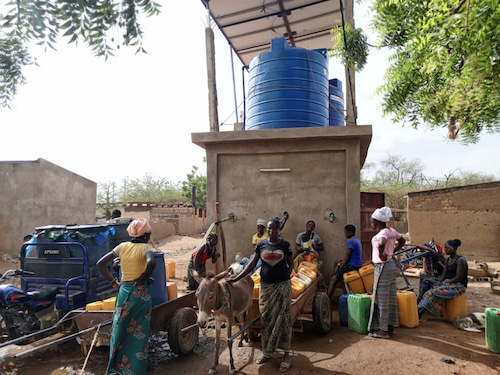
Training in Spain, laboratory equipment, drinking water, photovoltaic energy and telemedicine

Incidence in 30,500 people

congo

Photo by Russell Watkins, Department for International Development

Burkina Faso

1 Doctor/10,000 Inhabitants

Resource 8

Since 2007

3 health centres supported

Intervention for cardiac patients in Spain, telemedicine

Incidence in 60,000 people

Pielá - water well - Burkina Faso

Côte d'Ivoire

1,6 Doctors/10,000 Inhabitants

Resource 8

Since 2017

23 health centres supported

Telemedicine, hospital management, maternal and child health, mental health, sickle cell disease, diabetes

Incidence in 148,000 people

côte d'ivoire context

Benin

0,62 Doctors/10,000 Inhabitants

Resource 8

Since 2018

2 health centres intervened

Maternity infrastructure, drinking water, energy, ultrasound equipment, management

Incidence in 20,850 people

Privacy Overview

This website uses cookies so that we can provide you with the best user experience possible. Cookie information is stored in your browser and performs functions such as recognising you when you return to our website and helping our team to understand which sections of the website you find most interesting and useful.