EN | EN | FR


Child malnutrition day in Cameroon

Child malnutrition affects one in three children in Cameroon

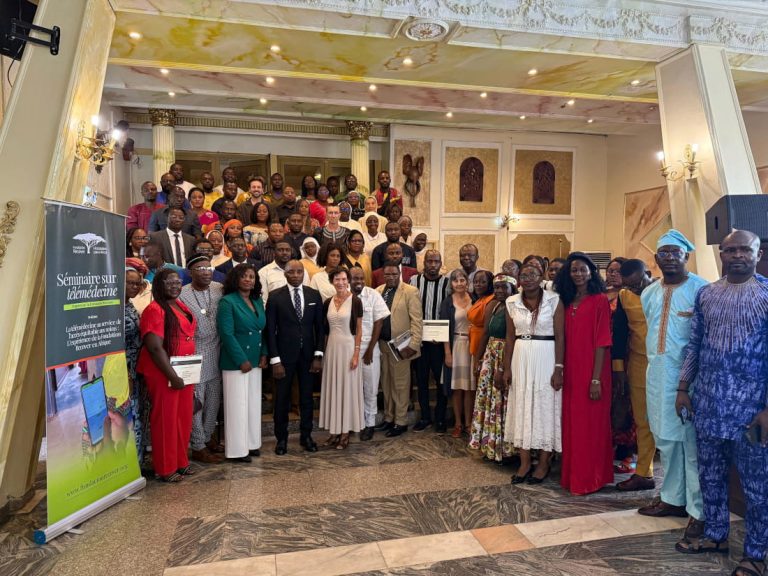
On Wednesday 25 October, under the theme «Addressing child malnutrition by strengthening multisectoral action», Fundación Recover organized a conference in Yaoundé (Cameroon) dedicated to addressing the challenge posed by this problem in Cameroon, in particular, and in sub-Saharan Africa in general, to which about 60 participants attended.

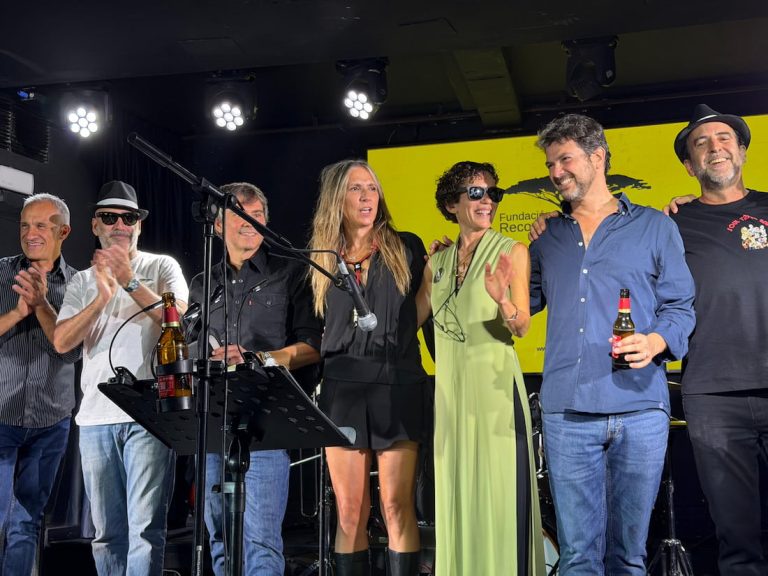
The event began with the presentation by our General Director, Marta Marañón, who presented the work that Fundación Recover has carried out with the NUTRI-m project. Also present were Ignacio Rafael García Lumbreras, His Excellency the Ambassador of Spain in the country; Mr. IHON III, coordinator of the technical secretariat of the Interministerial Committee for the Fight against Malnutrition; Nene Marc, head of nutrition at UNICEF; and Ngo Sack Cécile Patricia, representative of the Committee. Among those present was Evelyne Nguenyi, Head of Nutrition at the World Food Programme (PAM), staff from the health centers with which Fundación Recover collaborates and international NGOs.

From left to right: Marta Marañón Medina, Ignacio Rafael García Lumbreras and Mr. IHON III
 From left to right: Marta Marañón Medina, Ignacio Rafael García Lumbreras and Mr. IHON III

During the day, the need for a shared and holistic vision of the problem of childhood malnutrition was discussed in order to address it from a multi-stakeholder (administration, civil society and private sector) and multi-sectoral (health, water and sanitation, education and socio-cultural aspects) approach.

As noted during the day, Cameroon has an estimated population for 2023 of more than 28 million inhabitants, of whom 40% have less than 15 years of age. According to data from the country’s Ministry of Health and the WHO, there is a malnutrition rate of 32% in the western and central regions of the country, and 36% in the north and east of Cameroon.

With this data on hand, at Fundación Recover we launched the NUTRI-m infant nutrition pilot project in 2021, with the aim of benefiting the Cameroonian children aged 6 months to 5 years, contributing to reducing their mortality and improving their nutritional status.

The NUTRI-m project includes the continuous monitoring of the health and development of the children for a period of 9 to 12 months and a sensitization work for the children's guardians to improve their hygiene and nutrition habits, which is carried out through nutritional workshops, and through the recommendations and advice that all the children's guardians receive every week on their mobile phones, in order to improve their nutritional habits, hygiene and confidence in their health center.

In addition, where necessary, the program includes supplementation with vitamins, medications, hypercaloric milk formulas, and local preparations adapted to the nutritional status of the children, as well as hospitalization for cases of acute malnutrition.

The first experience was carried out in the west, at the Protestant Hospital of Baigom, and in the center of the country, at the Catholic Hospital of Santo Rosario de Mbalmayo. The project found that 9% of the children had symptoms of acute malnutrition and 32% suffered from chronic malnutrition.

Currently, the NUTRI-m project has reached more than 2,235 children and hopes to reach another 2,500 more in the short term.

As Marta Marañon pointed out, «The Nutri-m project and campaign are rigorous and have been successfully piloted in Cameroon, which is why Fundación Recover is prepared and willing to replicate and scale it in more areas of the country and the African region. The project is innovative and relies on technology to achieve social impact. Similarly, it is respectful of local culture and promotes the use of local foods to achieve a lasting and sustainable impact over time, contributing to significantly reducing childhood malnutrition.».

The day concluded with a practical workshop on the use of malnutrition management tools, which was attended by health professionals and experts from the Ministry of Health of Cameroon.

From Fundación Recover we invite you to collaborate in reducing childhood malnutrition by supporting our projects.

If you want to learn more about the campaign, click on the following link:
  I WANT TO COLLABORATE  

If you also want to collaborate, become a member of Recover now

Mauritania

2.6 Doctors/10,000 Inhabitants

Resource 8

From 2026

1 health centre supported

Cardiovascular Risk Campaign and Telemedicine

Incidence in 6,000 people

Namibia

5.5 Doctors/10,000 Inhabitants

Resource 8

From 2026

2 healthcare centres supported

Equipment, maternal and child health, and Telemedicine

Incidence in 7,000 people

Namibian Village

Sahrawi refugee camps

Population > 200,000

0.5 Doctors/1000 Inhabitants

Resource 8

From 2025

2 health centres supported

Telemedicine, infrastructures

Incidence in 13,000 people

Sahrawi camps - kindergarten

Spain

6.21 Doctors/10,000 Inhabitants

Resource 8

Since 2007

Resource 7

1,024 health and management volunteers, and non-health volunteers, offering their expertise

8 partner hospitals in the country

Resource 9

More than 90 companies/entities have collaborated with their projects

Tanzania

0,1 Doctors/10,000 Inhabitants

Resource 8

Since 2018

1 health centre supported

Operating theatre and other equipment, volunteering, telemedicine

Incidence in 10,140 people

Uganda

1,6 Doctors/10,000 Inhabitants

Resource 8

Since 2023

1 health centre supported

Telemedicine

Uganda context photo

South Sudan

0,4 Doctors/10,000 Inhabitants

Resource 8

Since 2023

2 health centres supported

Ophthalmology campaigns

Incidence in 15,000 people

Mobile Clinic H Yambio South Sudan

Republic of Chad

0,6 Doctors/10,000 Inhabitants

Resource 8

Since 2018

1 health centre supported

Grants for laboratory training and equipment, nutrition unit and patient intervention in Spain

Incidence in 10,000 people

Image source: CC BY 2.0, Link

Equatorial Guinea

3,5 Doctors/10,000 Inhabitants

Resource 8

Since 2023

3 health centres supported

Telemedicine

Incidence in 1,000 people

Guinea Ecautorial context photo

Cameroon

1,24 Doctors/10,000 Inhabitants

Resource 8

Since 2007

71 health centres supported

Resource 10

Hospital management, electricity, water and sanitation infrastructure, health campaigns (child malnutrition, cervical cancer, cardiovascular risk, malaria, sickle cell disease), equipment (operating theatre, laboratory and physiotherapy equipment, X-ray machines, ultrasound machines, electrocardiograms, incubators, dental chairs, ambulances, etc.), training scholarships in Spain and Africa, telemedicine, intervention of 63 patients in Spain.

Incidence in 998,218 people

cameroon

Burundi

0,65 Doctors/10,000 Inhabitants

Resource 8

Since 2024

1 health centres supported

Reference anatomical pathology laboratory

Incidence in 78,031 people

Democratic Republic of Congo

3,7 Doctors/10,000 Inhabitants

Resource 8

Since 2017

7 health centres supported

Training in Spain, laboratory equipment, drinking water, photovoltaic energy and telemedicine

Incidence in 30,500 people

congo

Photo by Russell Watkins, Department for International Development

Burkina Faso

1 Doctor/10,000 Inhabitants

Resource 8

Since 2007

3 health centres supported

Intervention for cardiac patients in Spain, telemedicine

Incidence in 60,000 people

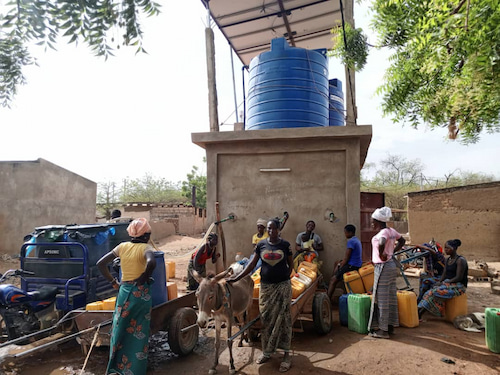
Pielá - water well - Burkina Faso

Côte d'Ivoire

1,6 Doctors/10,000 Inhabitants

Resource 8

Since 2017

23 health centres supported

Telemedicine, hospital management, maternal and child health, mental health, sickle cell disease, diabetes

Incidence in 148,000 people

côte d'ivoire context

Benin

0,62 Doctors/10,000 Inhabitants

Resource 8

Since 2018

2 health centres intervened

Maternity infrastructure, drinking water, energy, ultrasound equipment, management

Incidence in 20,850 people

Privacy Overview

This website uses cookies so that we can provide you with the best user experience possible. Cookie information is stored in your browser and performs functions such as recognising you when you return to our website and helping our team to understand which sections of the website you find most interesting and useful.